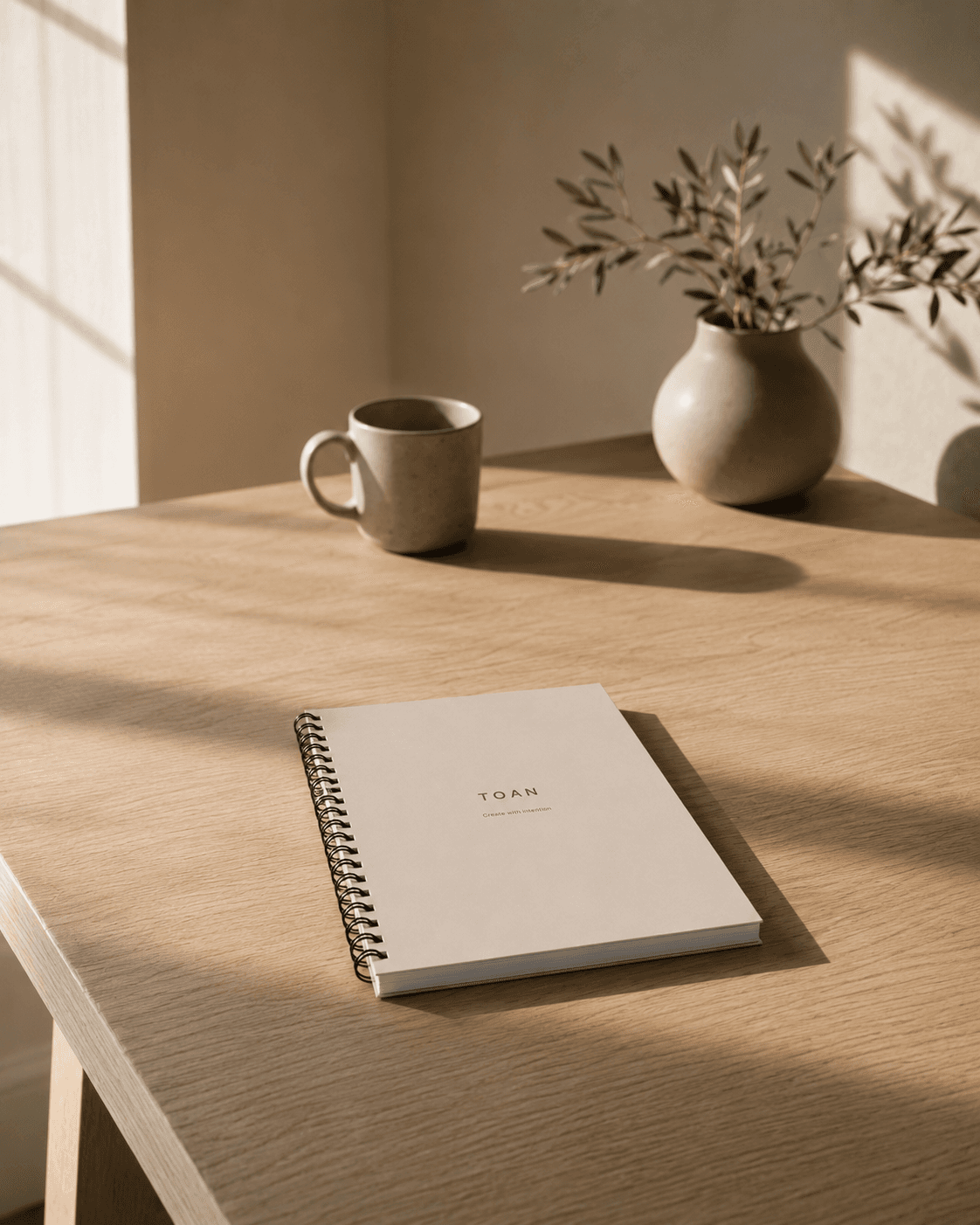
The TOAN Method
A planning rhythm that follows the shape of a life, not a machine.
Annual
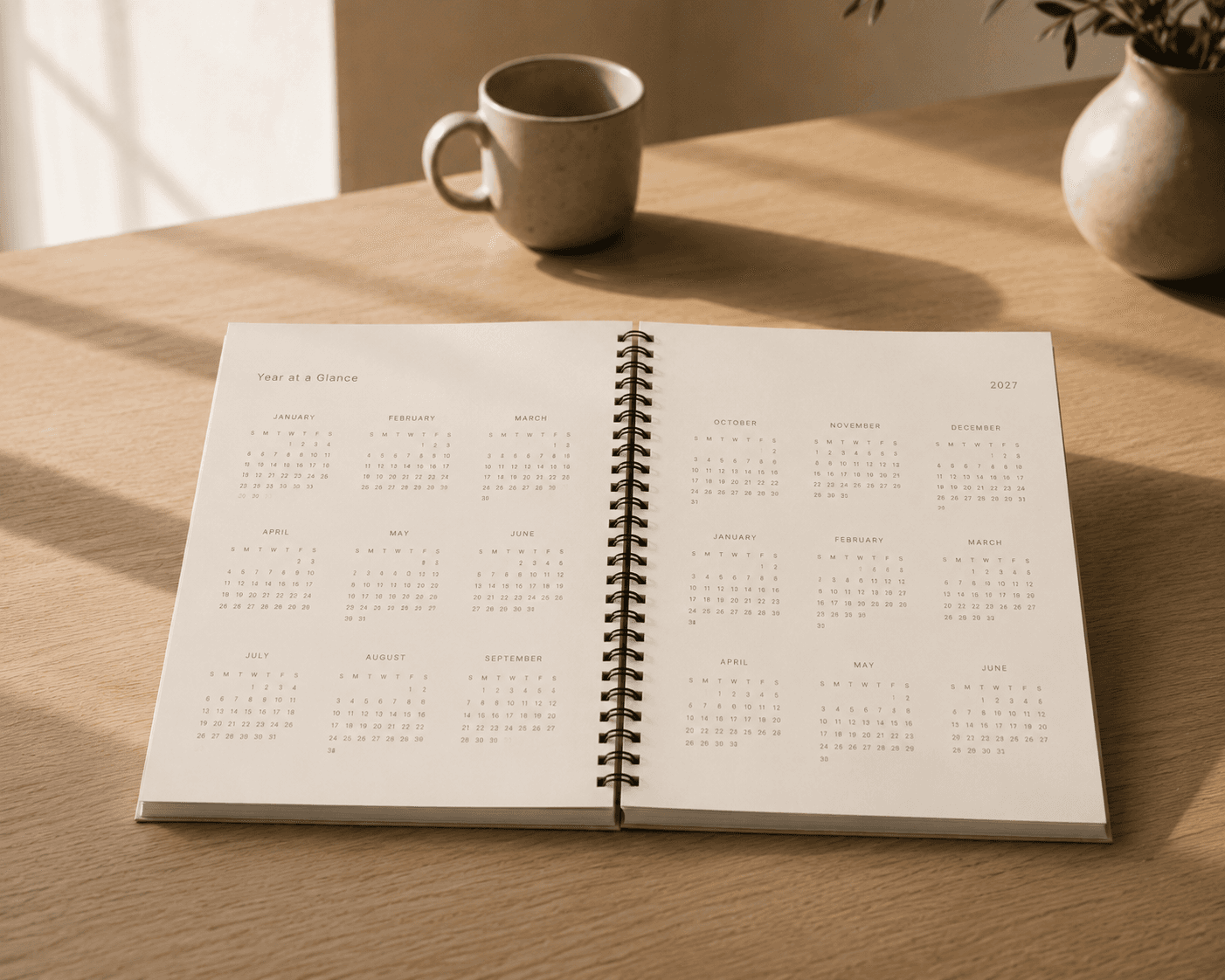
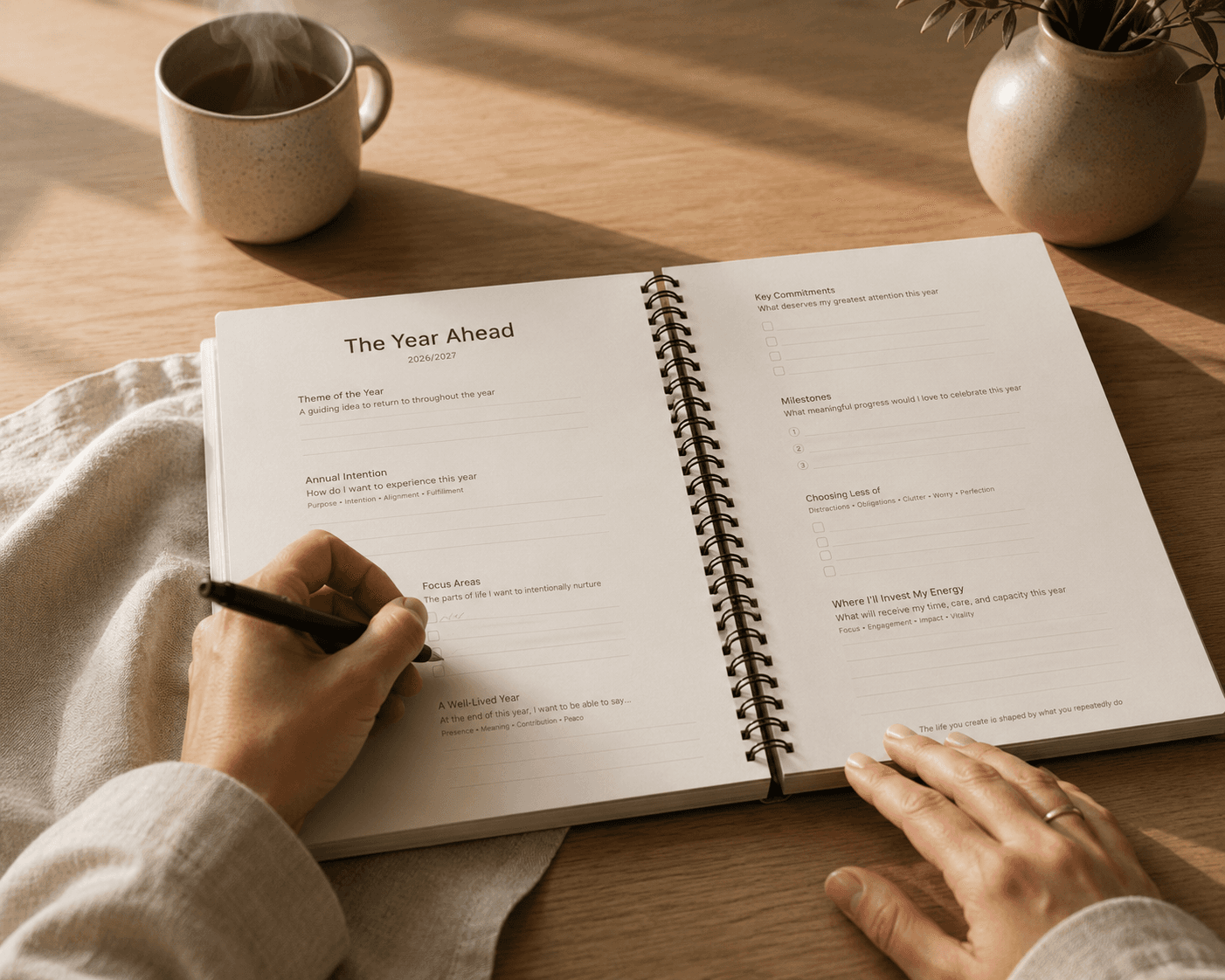
The annual overview is where clarity begins. Before you fill a single day, you step back and ask the big questions: what do I want more of this year? What matters most right now? Where do I want to be in twelve months? These are not goals in the traditional sense. They are intentions, gentle and alive. The annual pages hold space for a handful of them, no more, because real focus requires restraint. You return to this view across the year to stay oriented, and when the year ends, you have a record not of what you accomplished but of who you became.
Quarterly
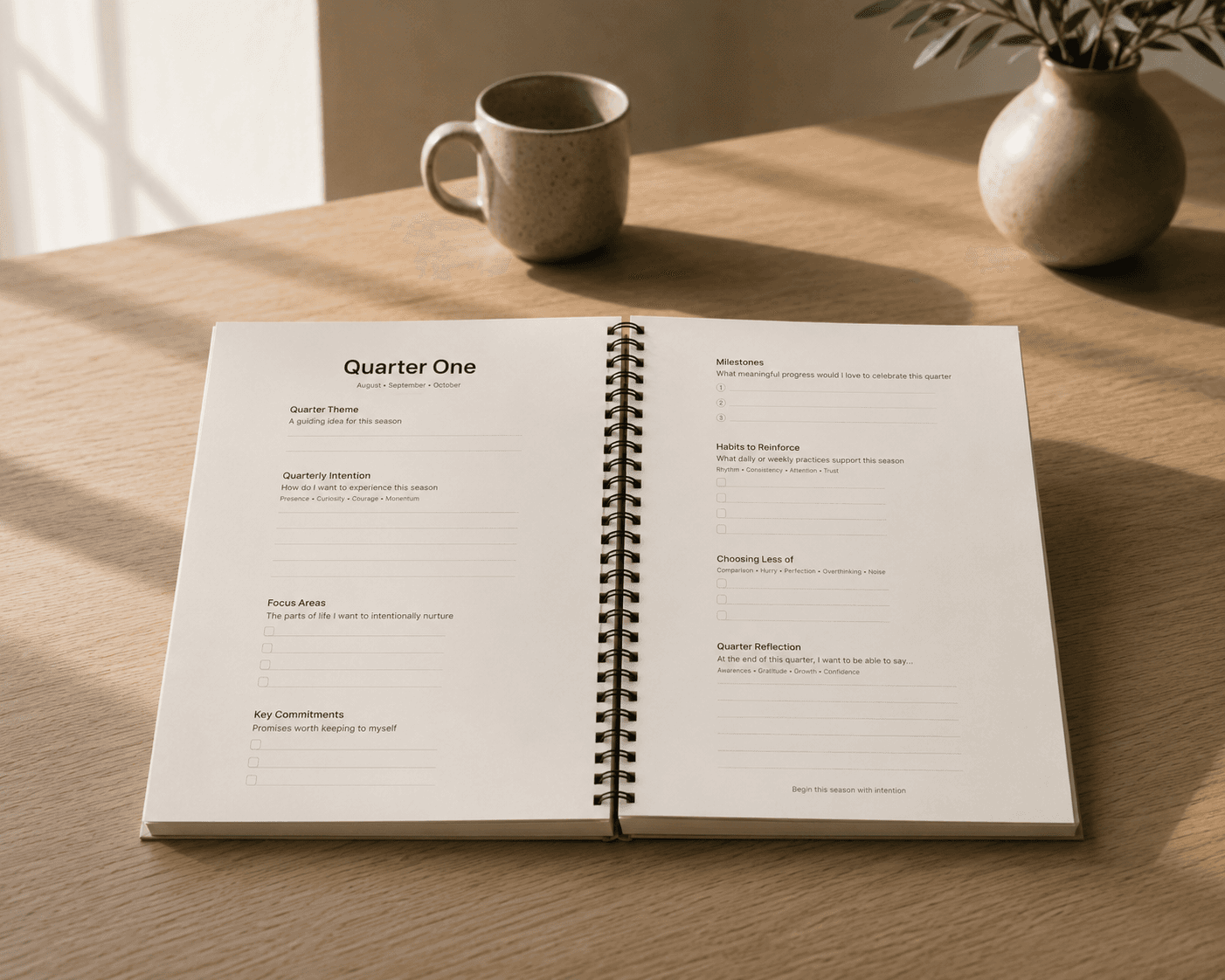
Three months is enough time for something real to unfold, and just enough distance to see it clearly. The quarterly review is a deliberate pause: a chance to revisit your annual intentions in light of what has actually happened. What shifted? What surprised you? What needs more attention and what can be released? There is no scoring, no metrics to hit. Just honest reflection, framed by the season you are in. Winter asks different things of you than summer. The quarterly pages honor that, helping you adjust course with grace rather than force.
Monthly
The monthly practice is about noticing before deciding. At the start of each month, you take a quiet moment to observe what is already in motion: commitments, tensions, opportunities. Then choose a theme that feels true. Not a to-do list with a deadline. A theme: connection, renewal, courage, patience. Something that gives the weeks ahead a shape and a quality. The monthly spread helps you carry this theme into your days without overwhelming you. It is preparation as presence, not pressure.
Weekly
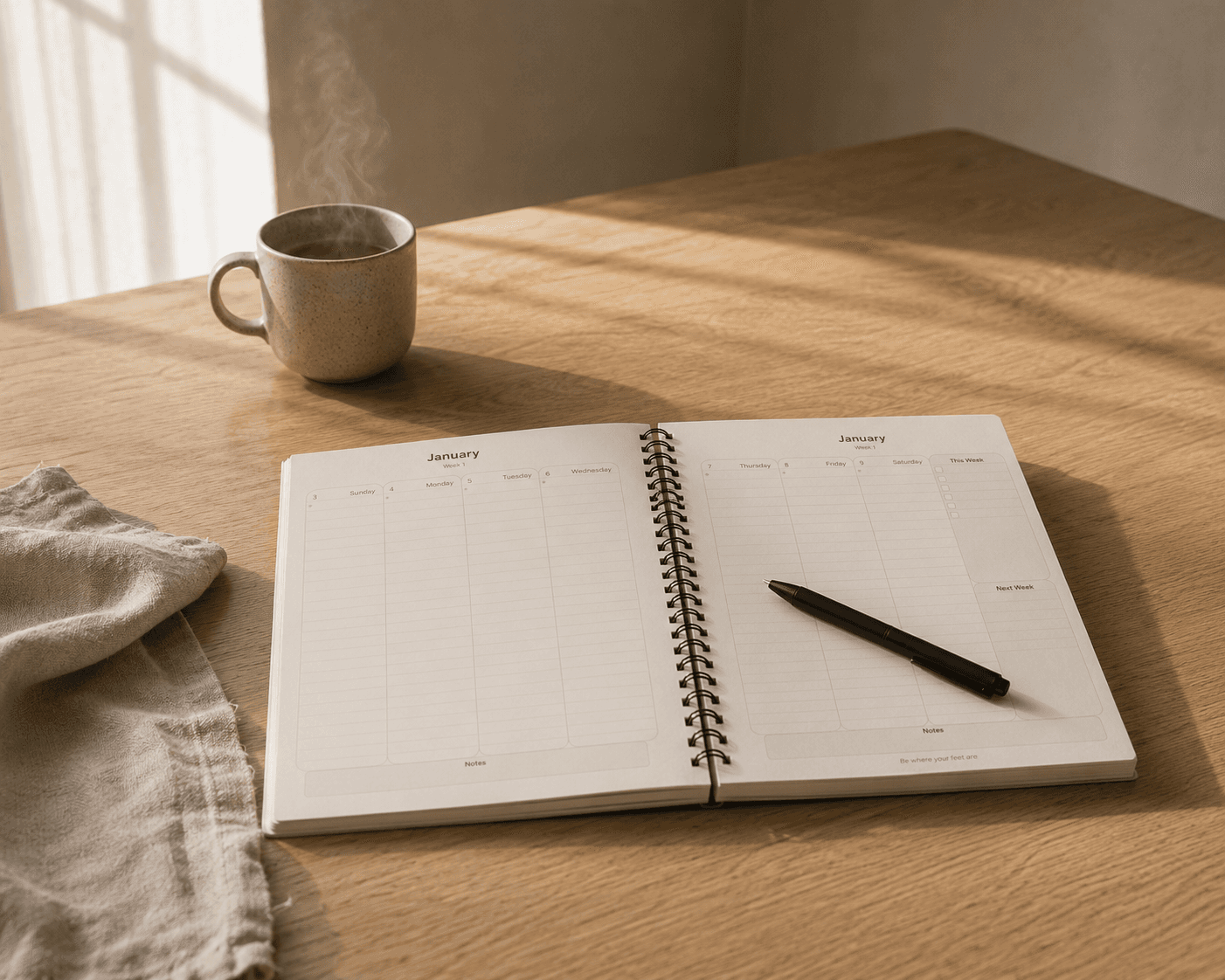
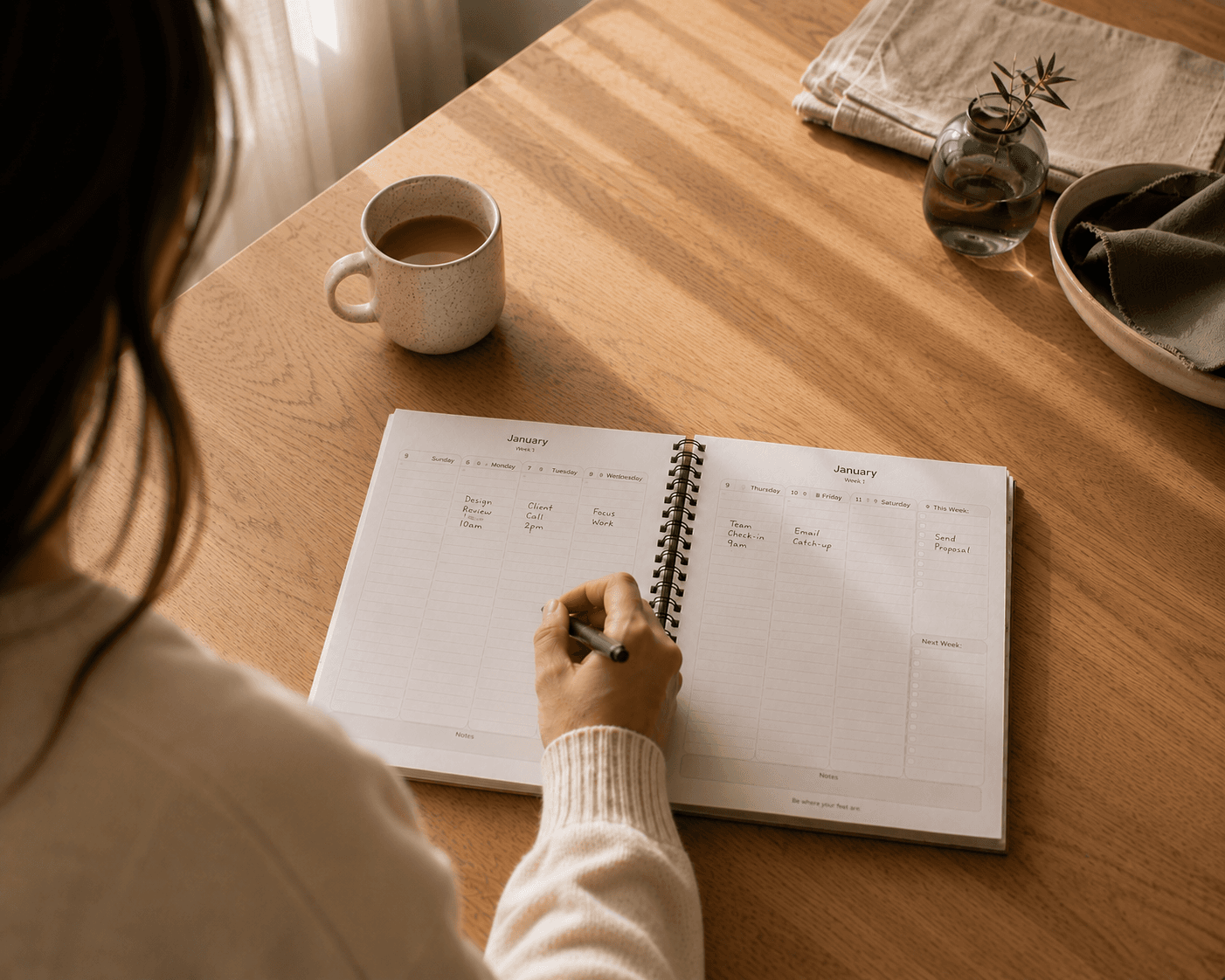
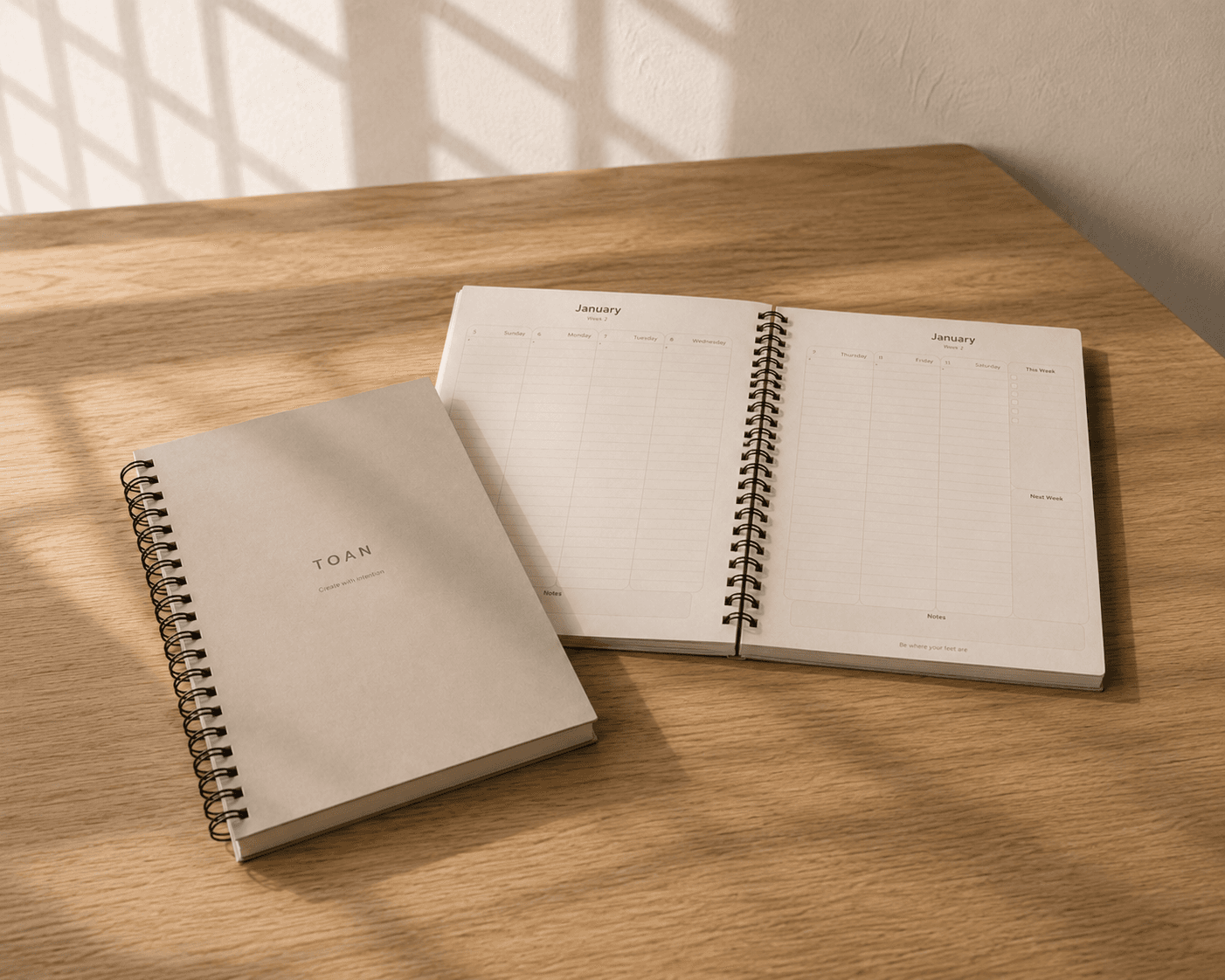
The week is where everything lands. It is close enough to touch and fast enough to slip away. The weekly practice brings your annual intentions, quarterly reflections, and monthly themes into the life you are actually living: the meetings, the meals, the quiet mornings and late nights. The spread is simple: space for what matters, room for what comes up, and a few gentle questions to keep you honest. No hourly breakdowns. No color-coding. Just a clean structure that helps you hold your priorities lightly and move through the week with intention.
How the rhythms work together
Each scale of planning asks a different question. The annual view asks what matters most. The quarterly pause asks what has shifted. The monthly practice asks what is taking shape. The weekly pages ask what you will do about it: today, this morning, right now. Together, they form a rhythm that moves with your life rather than against it. None of the levels is meant to be rigid. You move between them as needed, returning to the broad view when you feel lost and zooming in when you are ready to act.
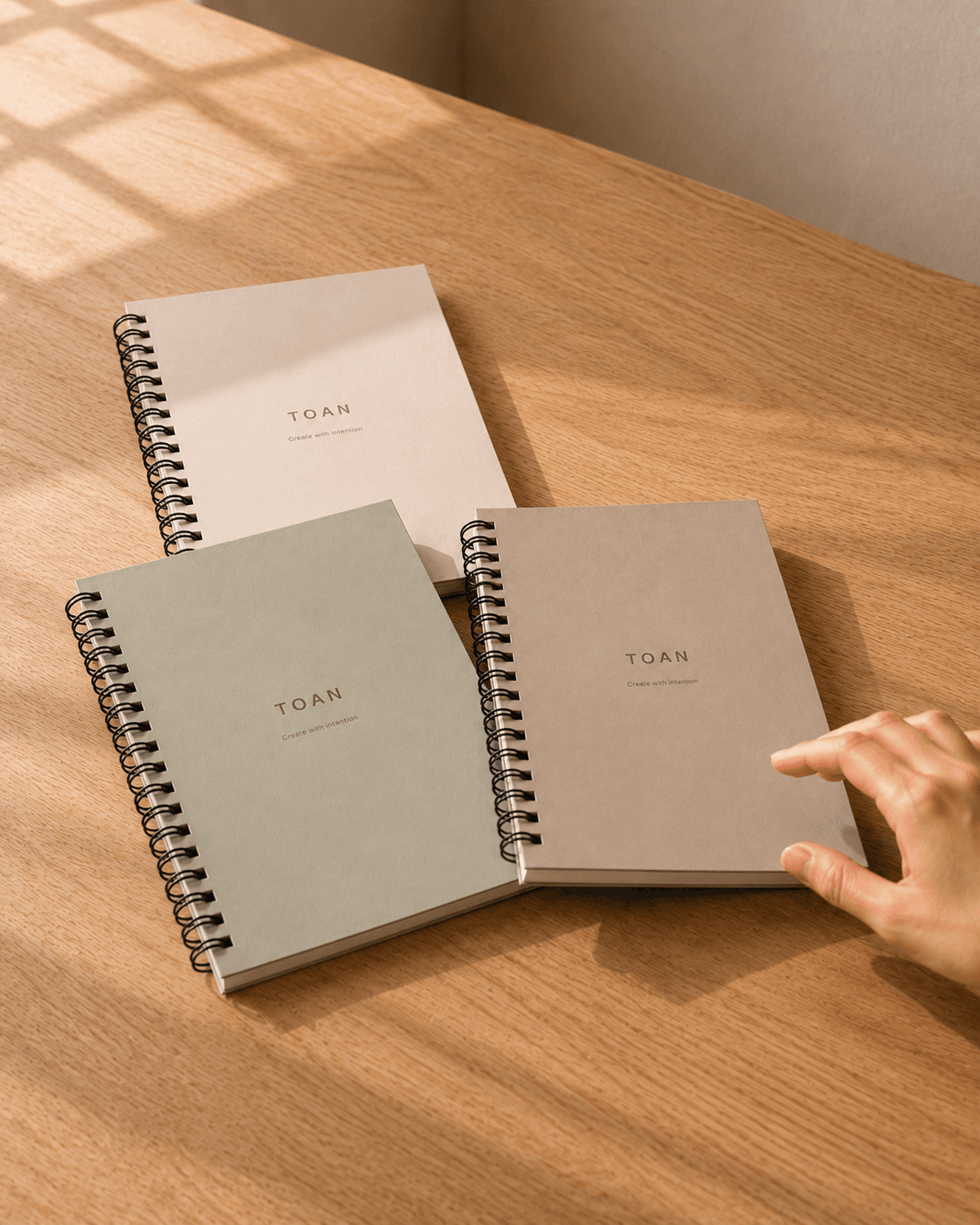
The TOAN method is not a productivity system. It is a practice of attention: a way of moving through time that values presence over pace and clarity over completion. The planner is simply where that practice lives.